The Muscle Tug of War: How to Know What to Strengthen and What to Lengthen
Apr 15, 2019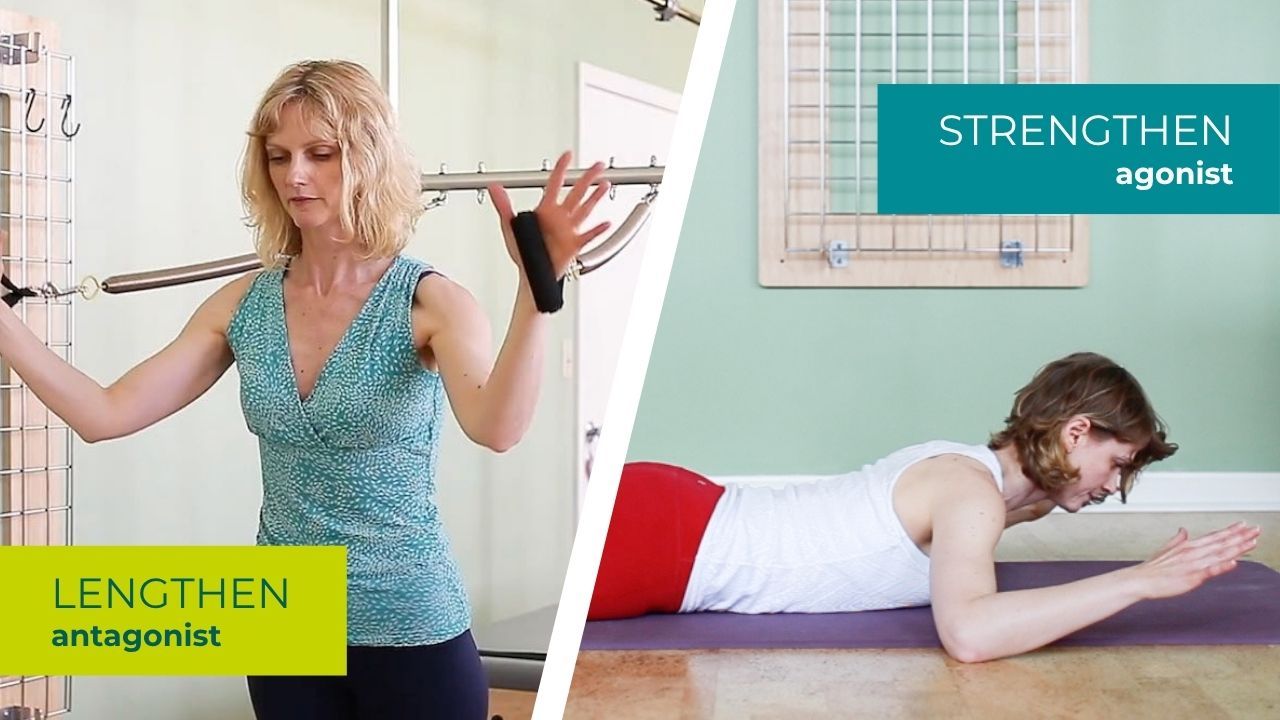
When correcting movement in any direction, always consider both opposing sides of the joint.
A shoulder that rounds forward, for example, may be the result of shortened pectoral muscles. It may also be influenced by weakness in the posterior shoulder muscles, particularly the rotator cuff.
Correcting an anterior pelvic tilt to a more neutral standing position can involve lengthening shortened hip flexor muscles while simultaneously strengthening weak hip extensors, such as the gluteals and hamstrings.
Knees that buckle inward may be related to long, weakened adductor muscles or to weakness in the external hip rotators.
Likewise, a slouched torso can stem from weak abdominal muscles—which should support us eccentrically to help maintain an upright posture—or from weak spinal extensor muscles.
So which is the true culprit? Which came first?
It's often difficult to know. It's the classic "chicken or the egg" question. When an asymmetry initially develops, the opposing side of the joint frequently becomes part of the problem as well. For example, if the hip flexors remain in a shortened position for an extended period of time, the gluteals will often weaken over time.
Ideally, muscles should participate in a joyful tug of war. One side pulls, stimulating the other side to respond. In this way, they help keep each other both strong and flexible.
The takeaway? It's wise to begin by addressing both sides of the joint and observing the results.
If you choose Eve's Lunge on the Reformer to lengthen your student’s hip flexors, also include Hip Extension on the Trapeze Table to strengthen their hip extensors.
If you stretch the front of the chest - the pectoralis major and minor - with Book Opening, also strengthen the back of the shoulder and rotator cuff with Scarecrow.
After strengthening the adductors with Side Splits on the Reformer using a light spring, add Hip Opener on the Tower/Trapeze Table to strengthen the external hip rotators.
And if your focus is improving posture through greater abdominal strength, be sure to include spinal extension exercises as well.
After exploring both sides of the problem, you may discover that one approach produces a more noticeable effect than the other. That insight can reveal the most efficient path toward correcting the misalignment.
Want a faster way to connect the dots between what you see with what you teach? Inside the Pilates Encyclopedia membership, our Movement Skills category helps you identify both sides of a movement imbalance and quickly find exercises on every apparatus to address them. Spend less time wondering what to choose next and more time teaching with clarity and confidence. Join us and discover a smarter way to build balanced movement programs.