If Your Clients Are Getting Bored With Pilates, This Might Be Why
Nov 25, 2020
In conversations with my students over the years, I’ve often heard the same doubts come up:
“Will I ever get my body to do what I want?”
“Will I ever understand all these exercises?”
“Is this really worth the effort?”
If you’re a Pilates teacher, you’ve probably heard similar questions.
And if you’re honest, you may remember feeling the same way when you first started learning Pilates yourself.
Learning Pilates can feel overwhelming at first. There are unfamiliar movements, new coordination patterns, strange equipment, and lots of details to think about. For many people, it can feel like trying to juggle too many things at once.
Which reminds me of something else most of us had to learn once: driving a car.
Do you remember your first driving lessons?
Gas, brake, clutch.
Check the mirrors.
Watch the road.
Signal before turning.
It felt like a million things happening at once.
Thankfully, someone was sitting in the passenger seat guiding you through the process until it became second nature.
Today you probably drive without thinking much about it. The skills are integrated. Your body just knows what to do.
Learning Pilates follows a very similar path. And as Pilates teachers, we are the ones sitting in the passenger seat, helping our students navigate that learning process.
Our job is not just to teach exercises.
Our job is to guide people through the process of learning how to move differently.
And when we do that well, our students start to fall in love with Pilates.
Helping Students Enjoy the Learning Process
Give them permission to take their time
Efficient movement takes time to develop.
Muscles that have been moving a certain way for years don’t suddenly reorganize overnight. When people start Pilates, their bodies are often being asked to coordinate in completely new ways.
Sometimes it feels awkward. Sometimes it feels frustrating.
Reminding students that this process is normal can take a huge amount of pressure off.
Pilates is not about instant mastery.
It’s about gradual improvement.
Use clear and encouraging cueing
One of the fastest ways to help students feel successful is through clear cueing.
When your instructions are precise and encouraging, students understand what you want them to do and experience small wins more quickly.
Those small wins matter. They create motivation.
Students who feel progress—even tiny progress—are much more likely to stay committed to the practice.
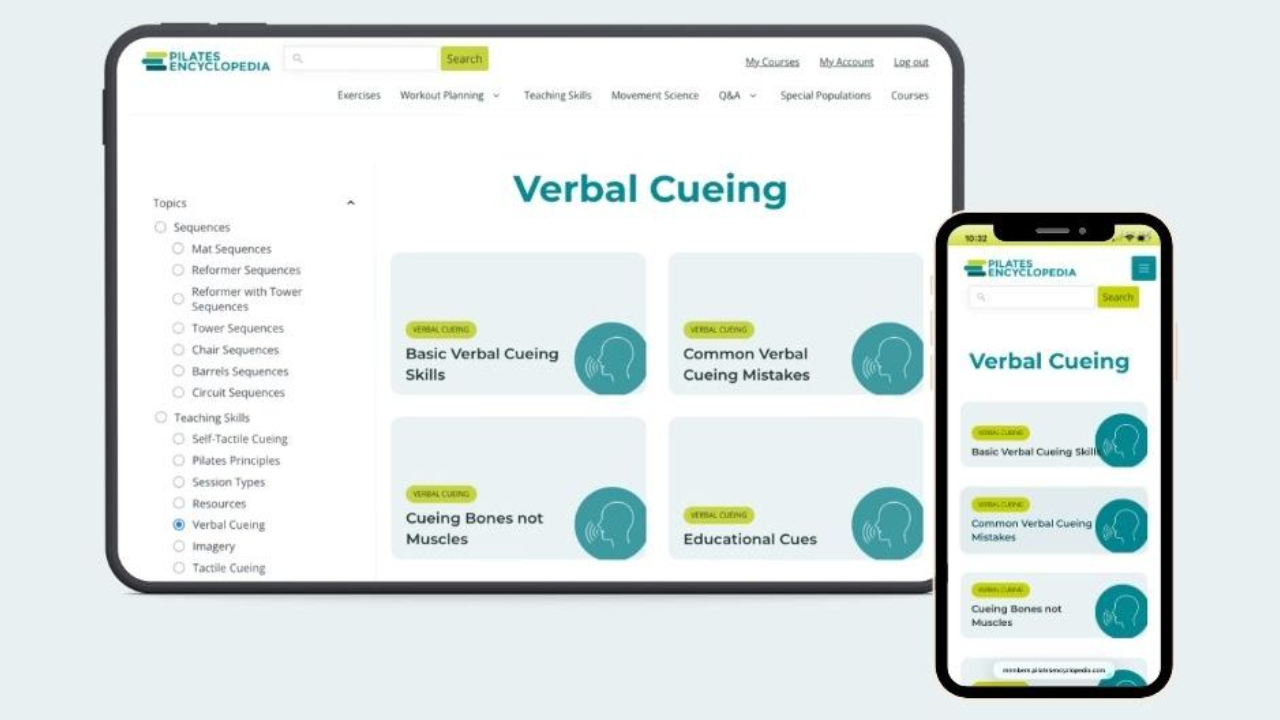
Related: The Cueing Cure: Dramatically Improve Your Verbal Cueing in 30-Days
Keep the atmosphere light
Some students are incredibly hard on themselves.
They treat every correction like a failure instead of feedback.
This is where humor and perspective are incredibly valuable tools.
A relaxed atmosphere helps students stay curious instead of critical.
And curiosity is where real learning happens.
Help them notice their own progress
Instead of constantly telling students what they did wrong, invite them to observe their own bodies.
Ask questions like:
“Did that feel different this time?”
“Where did you feel the work?”
“Was that easier than last week?”
These questions help students develop awareness.
And awareness is the foundation of the Pilates method.
When students begin to notice changes in their own bodies, they develop pride and ownership in their progress.
That’s when motivation becomes internal.
Align on a shared goal for the session
Before we start a session, I often remind my students of a very simple goal:
The purpose of this session is to feel better at the end than you did at the beginning.
Not exhausted.
Not defeated.
Better.
When students approach Pilates with this mindset, they become more present, more patient, and more receptive to learning.
And the entire session becomes a collaborative effort rather than a performance.
The Real Key to Long-Term Success in Pilates
Here’s the important part.
Keeping people excited about Pilates long-term does **not** come from constantly introducing new exercises or endless variations.
That might keep things temporarily interesting, but it doesn’t create meaningful change.
What keeps people committed to Pilates is something deeper:
A shift in how they think about movement, learning, and their bodies.
When students begin to understand the **process of learning movement**, everything changes.
They stop chasing novelty.
They start appreciating mastery.
They become curious about refining what they already know.
That’s when Pilates stops being “just another workout” and becomes a lifelong practice.
And helping students make that shift is a teaching skill that goes far beyond simply knowing the exercises.
Want to Teach Pilates This Way?
If you want to keep your students engaged with Pilates for years—not just weeks—you need more than a list of exercises.
You need strategies that help students:
* enjoy the learning process
* stay motivated through challenges
* develop awareness of their bodies
* and experience meaningful progress
Inside the Pilates Encyclopedia membership, we teach many practical strategies like the ones described above.
Not gimmicks.
Not endless exercise variations.
Real teaching tools that help you guide your students deeper into the Pilates method so they stay excited about their progress and keep coming back for more.
If you’re ready to become the kind of teacher who creates that kind of long-term impact, I’d love to support you inside the membership.