How to Choose the Right Pilates Teacher Training for You
Jan 06, 2026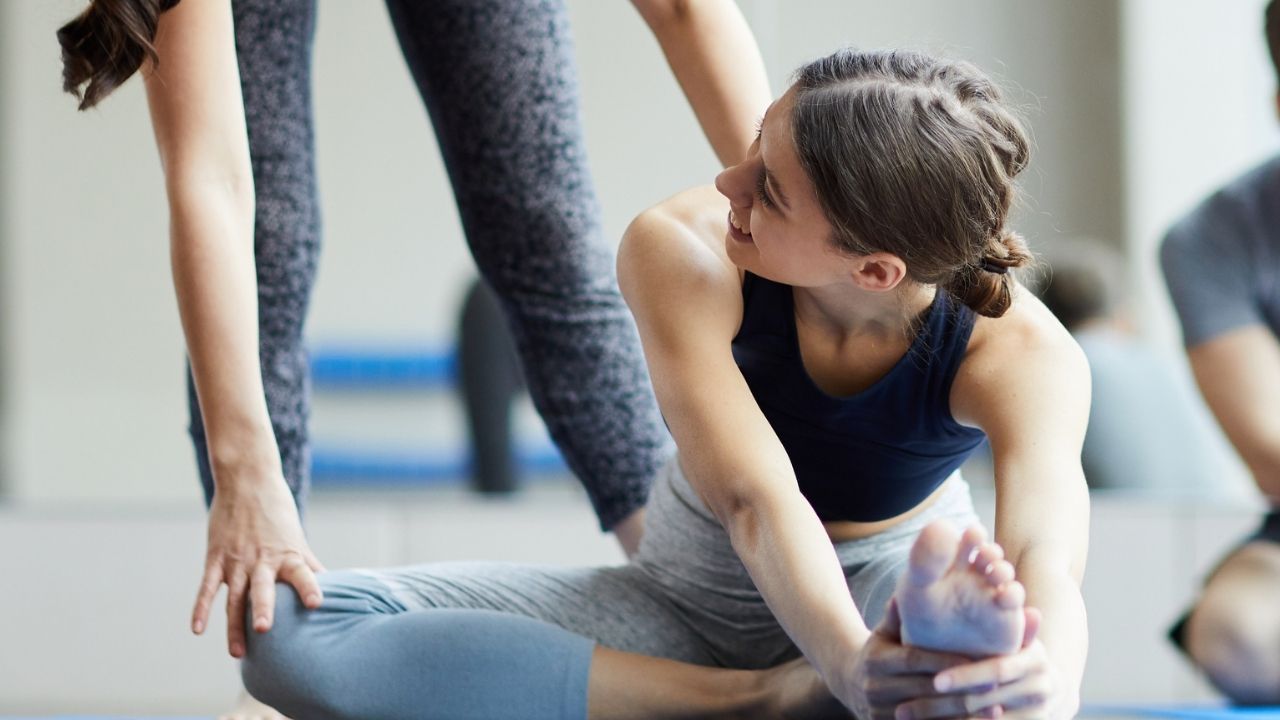
Choosing your pilates teacher training is a big step . . . and an important one.
It’s exciting because you’re about to take your love for pilates to the next level. But if you’ve started researching programs, you’ve probably noticed how many options there are and how different they can be.
Some offer short, intensive certifications that cover only the basics. Others span many months and go deeper into anatomy, biomechanics, and teaching practice.
Some are fully online, while others follow a traditional in-person model. Many now offer a hybrid format that combines both.
And then there’s the question of lineage, philosophy, and focus. Should you go classical, contemporary, or somewhere in between?
It can be overwhelming!
The truth is, there are a few truly great training programs out there, and a few that are more on the superficial side, and plenty that fall somewhere in between. The key to choosing the one that best fits your goals, schedule, and needs is knowing what to look for . . . and what to watch out for.
The problem is, you don’t know what you don’t know . . . and there are some important details that most people never talk about.
Let’s go through a few things that can help you make a confident, well-informed decision.
Start With Your Goals
Before you compare programs, get clear on what you want to get out of your training.
Do you want to:
- Make teaching pilates your full-time career?
- Add pilates as a skill or side gig alongside your main job?
- Teach a few classes a week while raising your children?
- Begin teaching later in retirement?
- Deepen your personal practice?
Your goal determines how comprehensive your training needs to be.
If your aim is to teach professionally, look for a comprehensive program that covers all apparatus, includes anatomy and biomechanics, and provides plenty of observation and practice teaching hours. These programs take longer and often cost more, but they will prepare you for real-world teaching situations.
If you’re doing the training primarily for personal growth, a smaller or more flexible program might be enough. But - we’ve seen this happen quite a bit - goals often shift once you begin.
Many people start their training thinking they’ll only teach part-time (or aren’t sure if they’ll even enjoy teaching) and then discover they love it. The problem is that if the training wasn’t comprehensive enough, they can end up feeling underprepared or insecure when they start working with clients.
While there is a solution for that (look for a bridge program with a school or teacher/mentor you admire), there is additional cost and time investment associated with that.
It can also help to think ahead about where you might want to teach after graduation. For example, some studios only hire instructors trained in a specific method, such as STOTT or Classical, while others are more flexible and welcome teachers from different backgrounds.
If your goal is to eventually open your own studio, consider the kind of clients you want to work with. If you’re retired and want to teach other older adults, look for a program that goes deeper into special populations and modifications. If you’re a younger mover or dancer who plans to teach mat classes in gyms or dance settings, a solid mat training with strong anatomy education might be enough to start.
The more physical limitations your clients have, the more teaching tools, equipment and variations you’ll need in your toolbox. This becomes especially important if you plan to work with older adults. Many older clients are uncomfortable with mat work and feel much more supported on the equipment, which means a mat-only training isn’t enough to prepare you for the clients you actually want to help.
Look for Hands-On, In-Person Training
Once you know what you want to get out of your training, take a close look at how the program is delivered.
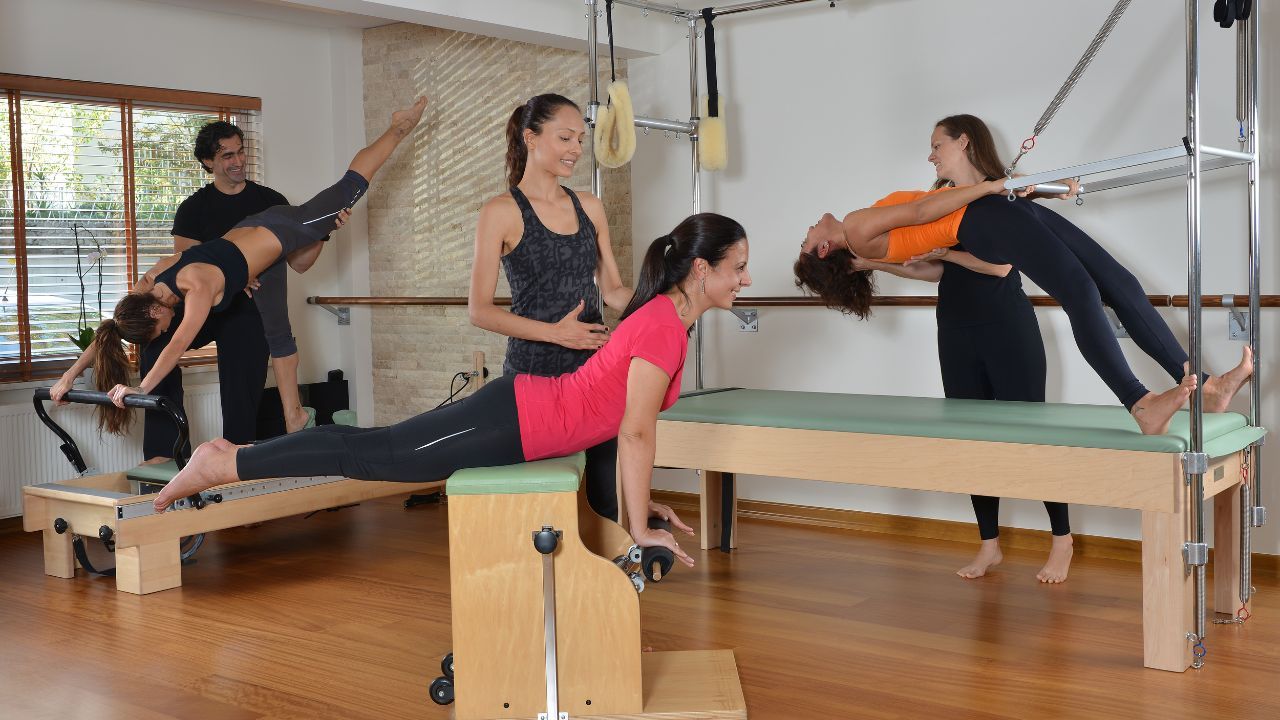
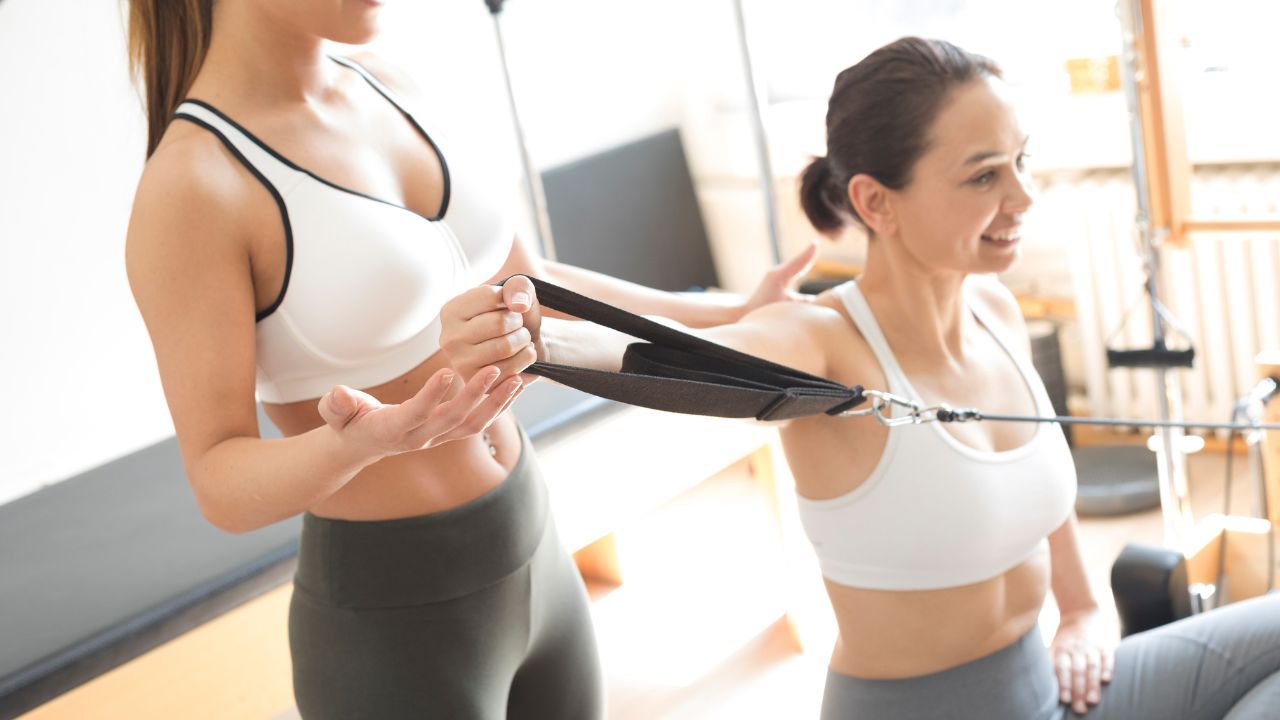
Pilates is a movement-based practice and some things can only be learned through direct experience. While anatomy and theory can be studied online, learning the exercises themselves (with their countless variations and modifications) requires in-person guidance. You need to feel the work in your own body, observe others, and receive feedback from a qualified trainer.
The best programs include plenty of hands-on practice time where you can move, teach, and get corrections in real time. Most programs now include some form of online coursework, which can work well if it’s paired with live, hands-on sessions. Hybrid models are a great option as long as there’s meaningful support when you have questions and plenty of in-person opportunities for observation, practice, and feedback.
Fully online programs might be convenient, but they often lack the depth and embodied understanding needed to become a confident, effective teacher.
Look Past the First Impression
Most pilates teacher training programs are led by kind, passionate, well-meaning teachers who truly want to share their love of the method.
But even with the best intentions, the first impression (whether from marketing materials, discovery calls, or in-person conversations) doesn’t always give you the full picture of what the training experience will actually be like.
That’s why it’s important to go a little deeper. Ask clear, specific questions such as:
- How many total hours the training includes (and whether it’s NPCP approved; those programs are a minimum of 450 hours).
- How the hours are divided between lecture, self-study, observation, and practice teaching. Look for a ratio of ⅓ theoretical and ⅔ practical hours.
- What’s included in the training fee. Some programs require additional paid classes, workshops, or materials that aren’t listed in the main tuition fee.
- When and where you’ll practice. Will you have access to equipment outside of class hours? If the studio is busy from early morning until evening, when will you complete your practice sessions?
The more you ask now, the fewer surprises you’ll encounter later . . . and the better prepared you’ll be to choose a program that truly supports your growth.
Understand the Program’s Approach and Lineage
Every pilates teacher training program is shaped by the people who created it. Some stay close to Joseph Pilates’ original method, while others take a more contemporary approach that integrates modern movement science.
Neither is automatically better than the other. The key is to understand how the program defines and teaches pilates so you know what kind of teacher it will shape you into.
Ask about the program’s lineage and teaching philosophy:
- Who developed the curriculum?
- Who trained the trainers?
- What is their perspective on alignment, progression, and modifications?
- Do trainees get direct coaching, not just lectures?
You don’t have to know all the historical details to make a good choice, but it helps to understand what kind of thinking and values are behind the method you’ll be learning.
Observe the Trainers in Action
If possible, watch the trainers teach. Take a class, sit in on a session, or join a virtual observation.
And please, don’t just stop at one class. Take several with the teacher who will be your mentor before signing up for a training with them.
It might sound obvious, but you'd be surprised by how often people decide to become pilates teachers without having spent much time actually taking pilates classes. Getting to know your potential trainer’s teaching style firsthand will tell you so much about what your learning experience will be like.
What to look for:
- Do they explain the “why,” not just the “how”
- Do they give clear, actionable feedback
- Do they adjust for different bodies and goals
- Can they break complex movements into teachable steps
If you’re not local, ask for observation options or recorded samples. Also ask current trainees how often they receive personal feedback and what that looks like in practice.
Seeing how trainers communicate and coach will tell you far more about your learning experience than a brochure or a discovery call.
Talk to Graduates and Observe Their Teaching
One of the most honest ways to learn about a program is by talking to people who’ve completed it.
Ask them:
- What did they love most?
- Where did they feel underprepared?
- Did they receive feedback and mentorship throughout?
- Do they feel confident teaching now?
And if you can, watch them teach. Notice whether they seem clear, confident, and adaptable. That will tell you a lot about the kind of teacher the program produces.
You can also post in our Pilates Teaching Tips Facebook group to see if anyone has experience with the program you’re considering. It’s a great way to get real, balanced feedback.
Compare Structure, Support, and Scope
Once you’ve narrowed it down to a few options, take a deeper look at how each one operates.
Ask about:
- How long does it take the average trainee to complete the training? It’s also helpful to ask about the shortest and longest completion times from past trainees to get a realistic sense of the pace and flexibility.
- What’s the time commitment? Some programs follow a set schedule with required weekend modules (and it’s worth asking what happens if you can’t attend one), while others run more like an apprenticeship and can be adapted around your availability.
- What kind of ongoing support or mentorship is available after you graduate
- Will you have lifetime access to materials
And think about logistics:
- How flexible is the schedule?
- What happens if you need to miss a session?
- Are make-up options available?
Remember, you’re not just buying a certificate. You’re investing in your education and your confidence as a teacher.
Trust Clarity Over Emotion
It’s easy to get swept up in excitement or a good feeling when someone describes their training. Especially when so many programs sell the idea that teaching pilates is “so much fun”.
And, yes, it can be an incredibly rewarding career. After all, you’re helping people move better and feel better every day.
But it’s not easy.
Teaching pilates takes skill, awareness, and confidence . . . and that only comes from thorough, hands-on preparation. If you’re not well-prepared, it stops being fun very quickly.
In fact, many people finish their training and never go on to teach because they don’t feel ready. Even if they pass their exam, they still doubt their ability to guide a client safely, explain why something hurts, or help someone’s body move the way it’s meant to.
So, instead of focusing on how a program sounds, look for how it’s structured.
A thorough training will be organized, transparent about its expectations and costs, and clear about what support you’ll receive from start to finish.
Your goal isn’t to pick the program that gives you butterflies. It’s to pick the one that prepares you to teach with confidence and clarity . . . even when things get challenging.
Choose a Program That Truly Supports You
A great teacher training should leave you informed and supported, not guessing, overwhelmed, or unsure of what to do once you graduate.
Take your time. Ask questions. Look for depth, not just inspiration.
And if you’re looking for a flexible, mentorship-based program that helps you understand why Pilates works (not just how to teach it), take a look at the Pilates Encyclopedia Teacher Training Program.
It was designed for thoughtful teachers who want to teach with confidence, clarity, and purpose. Unlike many programs that focus on exercises first, the Pilates Encyclopedia Teacher Training inverts the typical structure.
We begin with movement, helping you understand how the body moves and why. Then we introduce exercises that develop each of those movement skills. From day one, you’ll see how anatomy and exercises connect, so they’re never treated as two separate subjects.
👉 Learn more about the Pilates Encyclopedia Teacher Training Program.