Pilates Exercises for Lumbar Flexion
Jan 30, 2019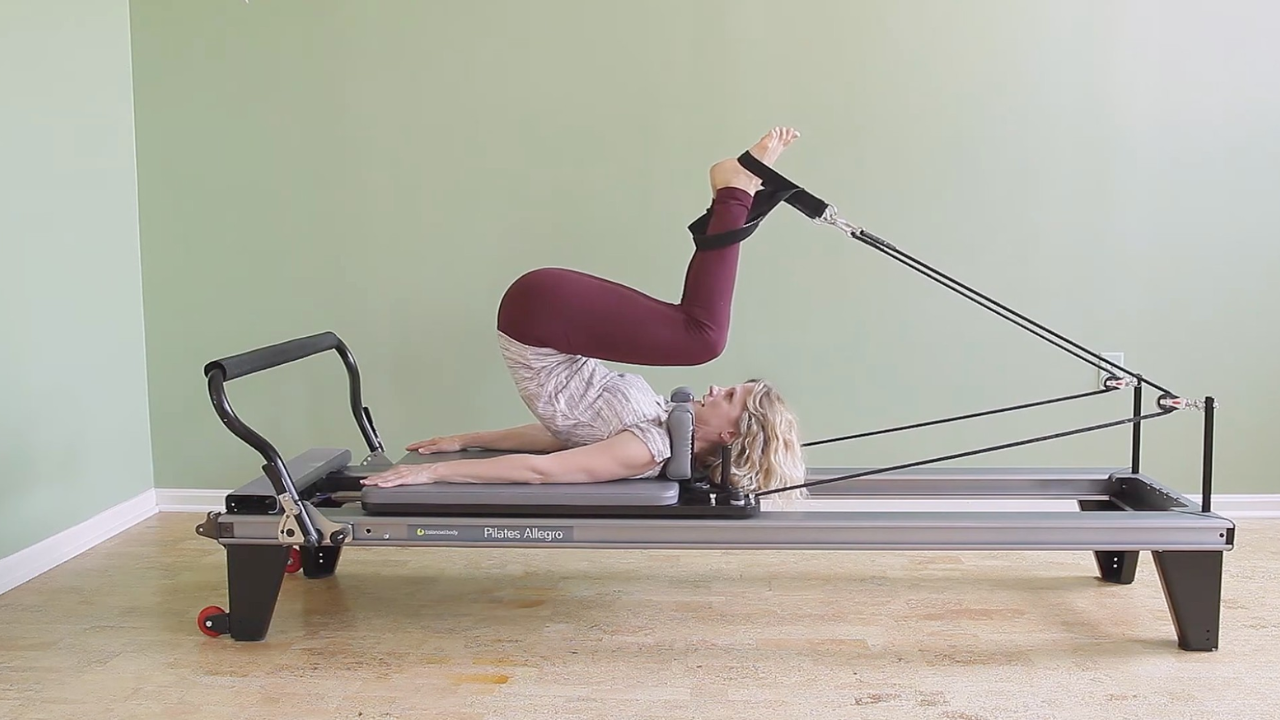
Lumbar flexion is a normal and necessary movement of the spine. We use it throughout daily life—when we bend forward, sit down, tie our shoes, pick something up from the floor, or curl our body to get out of bed. Rather than avoiding spinal flexion, a well-rounded movement practice should help us maintain the ability to move into and out of flexion with control.
Lumbar flexion is also closely connected to movement of the pelvis. When the pelvis tilts posteriorly, the natural lordotic curve of the lumbar spine decreases, and the lumbar spine moves toward flexion. In the opposite direction, an anterior pelvic tilt is associated with increased lumbar extension. In real movement, the pelvis and lumbar spine rarely operate independently; they work together as part of the larger lumbopelvic system.
This relationship is especially important in Pilates. Some exercises ask for only a small posterior pelvic tilt and subtle lumbar flexion, while others require progressively more spinal flexion and control. A Pelvic Tilt, C-Curve, Roll Up, Rolling Like a Ball, Teaser, and Boomerang may all involve lumbar flexion, but they challenge the body in very different ways.
A common misconception is that when someone struggles with an exercise such as the Roll Up, they simply need stronger abdominals. But abdominal strength can't make up for a movement that isn't available in the first place. Mobility into lumbar flexion is a prerequisite for controlling and strengthening lumbar flexion. If your client doesn't yet have sufficient lumbar flexion mobility, asking them to work harder may simply cause them to compensate somewhere else.
This is why it helps to think of movement skills in phases rather than jumping straight to the final Pilates exercise. Inside the Pilates Encyclopedia membership, our Movement Skills System differentiates between developing mobility, control, and strength so you can identify what your client actually needs before choosing an exercise.
Understanding where lumbar flexion shows up, how much is required, and what else the body has to do at the same time can help you choose the right exercise for the person in front of you.
Below, we'll look at Pilates exercises that incorporate lumbar flexion and how each one challenges this movement differently.
Exercises That Improve Lumbar Flexion MOBILITY
- MAT Child's Pose | great passive stretch for your lumbar extensors
- REFORMER Short Spine | many people's favorite for the exact reason that lumbar flexion is assisted and not required; although it's a lot easier the more flexible you are.
- TOWER/CADILLAC Monkey | this position doesn't require much skill or choreography and gives your lumbar spine a great stretch
- TOWER/CADILLAC Tower | this is a great choice to build control, once mobility into lumbar flexion is achieved
Exercises That Improve Lumbar Flexion CONTROL
- MAT Pelvic Rocking (aka Pelvic Clock 12 to 6) | one of the best ways to start working on posterior pelvic tilt and lumbar flexion control
- MAT Bridging | is the next step after Pelvic Rocking; you're taking the movement a bit higher up your spine
- MAT Cat | helps differentiate between flexion of the thoracic, cervical, and lumbar spine
- MAT C-Curve | is basically the same thing as Pelvic Rocking only in a seated position
- MAT Assisted Roll Up | this is a great way to work on maintaining lumbar flexion
- MAT Rolling Like a Ball | round things roll better than square things, so a round lumbar spine is crucial for success with all rolling exercises
- MAT Open Leg Rocker | very similar to Rolling Like a Ball but with straight legs and you're holding on to your legs
- REFORMER Roll Down | this is a good control exercise for those who already have the awareness and mobility for lumbar flexion
- TOWER Roll Down | the assistance from the springs reduces the amount of load dramatically, turning this into a control phase exercise for lumbar flexion; it's one of the easiest ways to introduce this movement skill
- SPINE CORRECTOR Roll Over | much easier than the mat variation; this would be my go-to for someone quite stiff in the lumbar spine
- SPINE CORRECTOR Bridging | with your feet higher than your shoulders, this gives you more room to maneuver, making lumbar flexion easier for those with a stiff spine
- SPINE CORRECTOR C-Curve | great awareness exercise, but doesn't build a lot of strength or mobility
Exercises That Improve on Lumbar Flexion STRENGTH
- MAT Roll Up | the reason this is many practitioner's nemesis is lumbar flexion, not abdominal strength, as you might think
- MAT Roll Over | just as or even more difficult than the Roll Up because you need to lift the weight of your pelvis
- MAT Boomerang | is an advanced mat exercise that includes the Roll Up
- CHAIR Tendon Stretch | requires good lumbar flexion mobility and control as well as arm and shoulder strength
- CHAIR Teaser From the Floor | once you have awareness of lumbar flexion and a good posterior pelvic tilt, this is a nice way to build strength, especially in combination with your arms
Don't just ask, “Which exercise should I teach?”
Ask, “Which movement skill does this person need next?”
The Movement Skills System inside Pilates Encyclopedia helps you distinguish between mobility, control, and strength—and understand how Pilates exercises fit into that progression.
Instead of simply giving a client more exercises or making an exercise harder, you can identify the missing piece and choose an exercise that actually addresses it.
Explore the Movement Skills System inside the Pilates Encyclopedia membership.