Improve Body Awareness in Pilates Using a Wall
Dec 16, 2020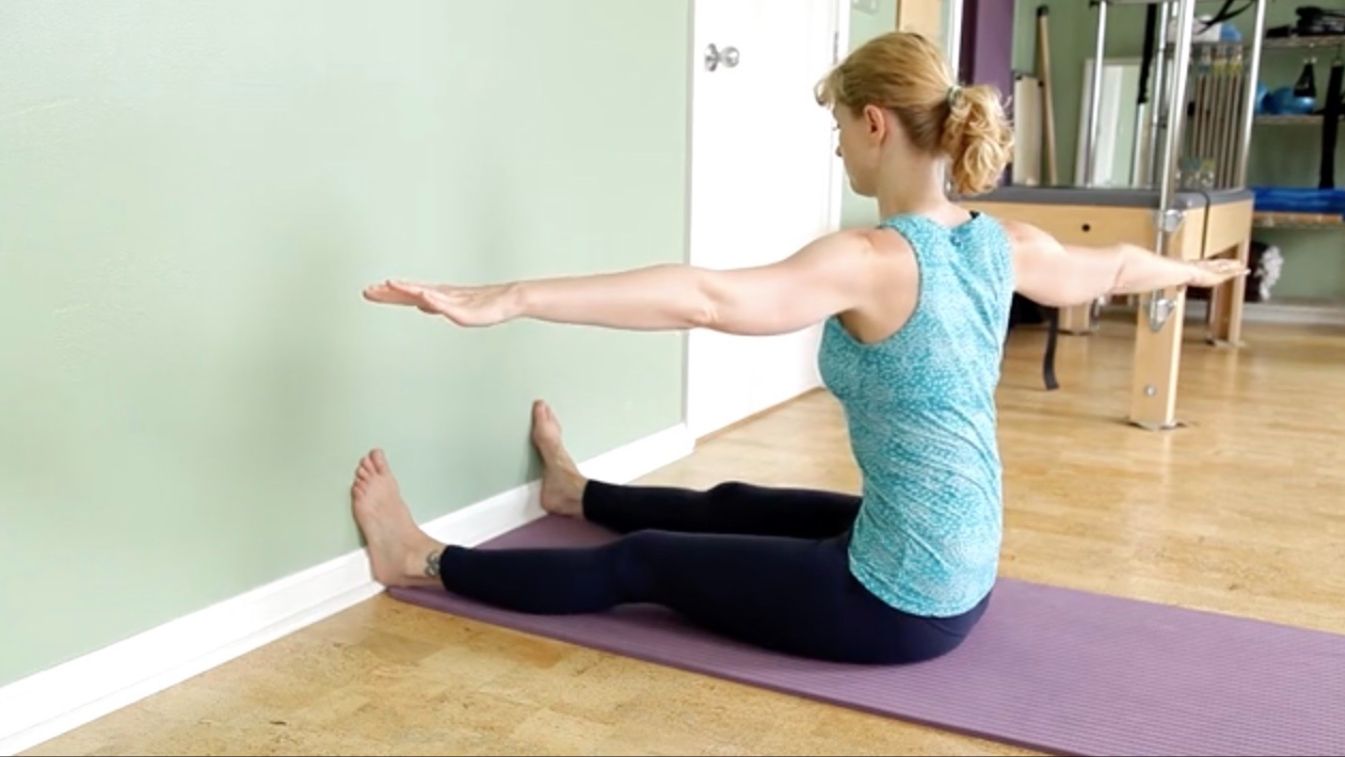
Developing body awareness is a central aim of Pilates practice. It allows for more precise movement, better coordination, and a deeper understanding of how the body organizes itself in space.
One of the simplest and most effective tools for cultivating this awareness is the wall.
Often overlooked, the wall provides consistent, non-negotiable feedback. It offers a reference point that helps clarify alignment, reveal compensations, and support more efficient movement patterns. It turns any exercise into a closed-chain environment, which is shown to be the easiest way to learn a new or different way to move and organize the body.
Why Use the Wall?
Unlike mirrors, which rely on visual interpretation, the wall offers direct sensory input. It allows you to feel your position rather than judge it.
Working with the wall can help you:
-
Recognize neutral alignment
-
Detect asymmetries between sides of the body
-
Improve proprioception (your sense of where you are in space)
-
Develop more accurate muscle recruitment
-
Reduce unnecessary tension
The wall does not instruct—it reflects. This makes it a powerful teaching partner.
Establishing a Relationship with the Wall
Begin by standing with your back against the wall. Take a moment to notice the points of contact:
-
Back of the head
-
Shoulder blades
-
Ribcage
-
Pelvis
Not every part of the spine will touch, and that is appropriate. The natural curves of the spine should remain present.
Rather than trying to “press” yourself into the wall, allow the wall to inform you:
-
Where do you feel more pressure?
-
Where do you feel space?
-
Does one side meet the wall differently than the other?
This exploration builds a clearer internal map of your body.
Refining Alignment
The wall can guide you toward a more balanced organization without forcing a fixed position.
For example:
-
If the ribs are thrusting forward, you may feel them lose contact with the wall.
-
If the pelvis is tucked, the lower back may flatten excessively.
-
If the head juts forward, it may not comfortably rest against the wall.
Use these sensations as information, not correction cues. Start with where you are and gently adjust until you find a position that feels both supported and easeful, where effort is distributed rather than concentrated.
Integrating Breath
Once aligned, bring attention to your breath.
Notice how the ribcage expands:
-
Can you feel the back of the ribs widen into the wall?
-
Does the breath remain smooth and unforced?
The wall can enhance awareness of posterior breathing, which is often less familiar but essential for balanced trunk support.
Moving with Feedback
The value of the wall extends beyond stillness. It becomes even more useful when you begin to move while maintaining awareness of your contact points.
Simple movements might include:
-
Arm raises while maintaining the same contact points on the back of the ribcage; this helps with shoulder differentiation (dissociation), the ability to move the arm without moving the ribcage
-
Small knee bends without moving the pelvis; this helps with hip dissociation, the ability to move your legs without moving your pelvis
As you move, notice:
-
What changes in your contact with the wall
-
Where you lose support or create tension
-
How your body reorganizes to maintain balance
This process strengthens the connection between awareness and action.
Carrying Awareness into Practice
The goal is not to rely on the wall, but to internalize the feedback it provides.
Over time, the sensations you develop—of alignment, support, and ease—can be carried into mat work, apparatus exercises, and daily movement.
The wall simply accelerates the learning process by making the invisible more tangible.
3 Examples
This video will show how a wall can help teach awareness in these 3 exercises:
- Plank + Inverted V
- Side Balance / Side Kicks
- The Saw
Expanding Your Practice
Once you are comfortable using the wall as feedback, you can explore a wider range of exercises that challenge your awareness in different positions and movement patterns.
These variations can further refine coordination, balance, and control while maintaining the same principles of alignment and responsiveness.
- Bridging with feet up the wall
- Side Balance | press feet against the wall for flat surface
- Side Kick Series: front & back; flex & point; up & down
- Kneeling Lunge with rectus femoris stretch | place back shin up the wall (that’s a very intense stretch)
- Plank with both heels against the wall
- Inverted V with both heels against the wall
- Standing with your Back Against The Wall
- Shoulder Flexion | reach arms forward and up without letting your bra strap come away from the wall
- Goal Post | reach your arms straight forward, bend your elbows 90 degrees so your fingers are now pointing to the ceiling, slowly open your arms to the wall. Try to touch your wrists to the wall without letting your bra strap pull away from the wall.
- Roll Down | Begin with your feet a foot away from the wall; slowly peel one vertebra at a time away from the wall as you roll down. Roll back up slowly, segmentally rolling through each vertebra. Progress by walking your feet closer to the wall. Watch a video.
- Wall Squat | slide down the wall until your thighs are parallel to the floor and hold
- Figure 4 Stretch | with both buttocks leaning against the wall
- Standing Scooter | Facing into room, press one foot against the wall, isometric hold
- Front Leg Raise | Stand facing wall, lift one leg forward and place foot against wall (strengthens standing leg glutes)
- Dead Lift (aka Warrior 3) | Facing away from the wall: step one foot back, extend all the way, place foot flat on the wall, toes pointing straight down: extend opposite arm forward. Progress to same arm.
Want to learn more? Inside the Pilates Encyclopedia membership, we have a in-depth tutorials for teach of the exercises listed above, including videos, movement analysis, regressions, progressions and cues for each.