How to Plan a Pilates Class: A Simple Framework for Pilates Instructors
Aug 30, 2026
One of the biggest challenges new Pilates instructors face isn't teaching.
It's planning.
You finish teacher training, you're handed your schedule, and suddenly you're staring at a blank piece of paper wondering:
"What am I going to teach tomorrow?"
If that sounds familiar, you're not alone.
In fact, many teacher training programs spend hundreds of hours teaching exercises, anatomy, and cueing—but very little time teaching how to build a class.
We All Start by Borrowing
When you're a new instructor, borrowing is completely normal.
You teach the class your mentor taught.
You repeat a flow you learned during training.
You download a class from a subscription site.
You save Instagram ideas.
You search YouTube.
There's absolutely nothing wrong with that.
In fact, it's how most of us begin.
Borrowing classes helps you develop confidence while you're still learning the repertoire and discovering your own teaching style.
But Eventually, Borrowing Isn't Enough
At some point, something changes.
You start teaching the same clients every week.
You begin noticing what they need.
One client struggles with spinal mobility.
Another needs stronger hips.
Someone else is recovering from an injury.
Suddenly you realize...
The class you copied wasn't designed for your students.
Could it still be a great class?
Absolutely.
Could it even be perfect?
Maybe.
But the odds are much higher that a class designed specifically for the people standing in front of you will be even better.
That's the moment you stop thinking like someone following a recipe and start thinking like a Pilates instructor.
Good Class Planning Creates Freedom
Ironically, the more structure you have, the more creative you become.
Without a plan, you're constantly asking yourself:
"What's next?"
"Did I already do rotation?"
"Have we done enough extension?"
"What body position should I use now?"
Those questions occupy valuable mental space while you're trying to teach.
A good class-planning framework removes that burden.
Instead of worrying about what comes next, you can focus on your students.
Structure Doesn't Limit Creativity
Some instructors worry that using a template will make every class feel the same.
I believe the opposite is true.
A good template provides structure without removing creativity.
You know where you're going next.
What changes is how you get there.
We usually start supine because it's the easiest position to be in and it has the least amount of load on your spine.
One week, you may choose Footwork.
The next week, Bridging.
Another week, the Stomach Series.
The supine block stays the same.
The journey changes.
Then we'll move to prone.
One week, you may choose Pulling Straps.
The next week, Swan.
Another week, Swimming.
The body position stays the same, but the movement pattern changes.
That's what keeps teaching interesting—for both you and your clients.
Stop Thinking in Checklists
Many instructors plan classes by mentally checking off categories.
Did we do spinal extension?
Rotation?
Lateral flexion?
Balance?
Core?
While those are all important considerations, constantly checking boxes can interrupt the natural flow of a class.
Instead, use a framework that already accounts for those movement patterns.
When the structure is thoughtfully designed, you don't have to remember every category because it's already built into the process.
Don't Forget Body Positions
Another common oversight is spending an entire class in only one or two positions.
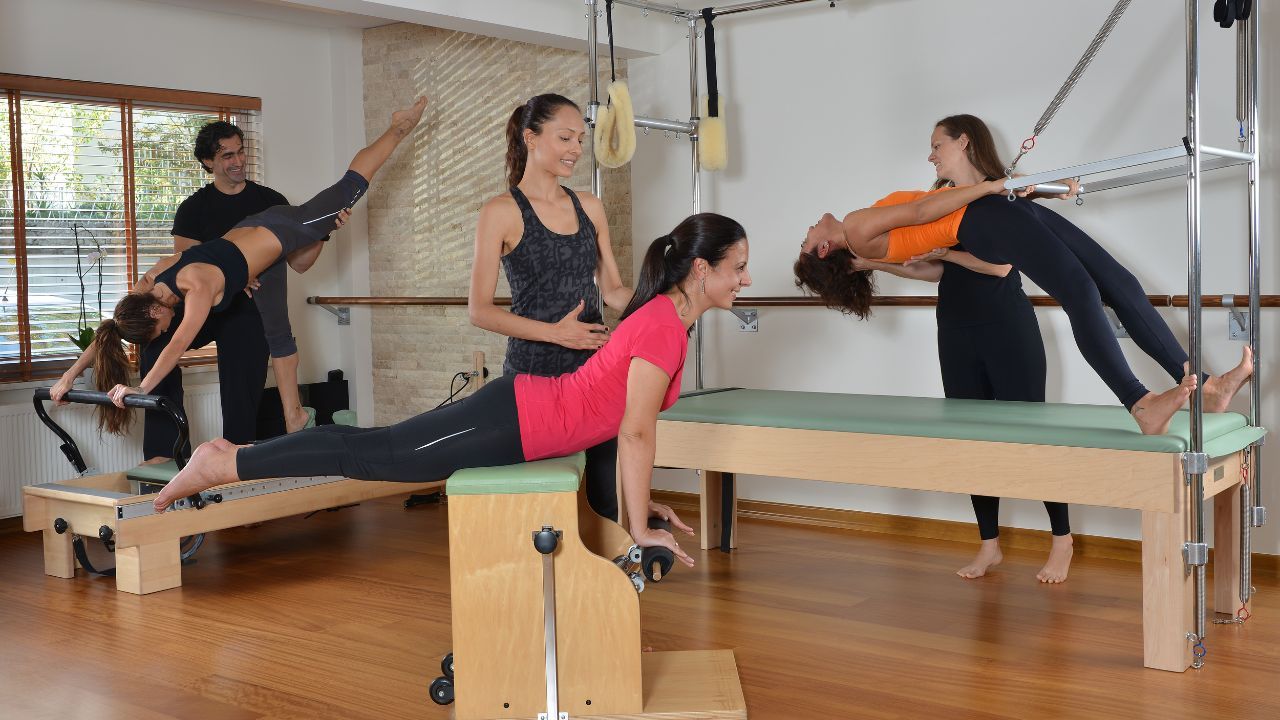
A well-balanced Pilates class gives students opportunities to move in a variety of ways.
Standing.
Supine.
Side lying.
Prone.
Seated.
Quadruped.
Kneeling.
Changing body positions not only creates a more complete movement experience, but it also keeps classes engaging and helps prepare students for movement in everyday life.
The ADAPT Pilates Template
This is exactly why I created the ADAPT Pilates Class Planning Template.
Rather than giving you another class to copy, it gives you a framework for building your own.
It helps you organize movement, balance body positions, cover essential movement patterns, and create classes that are tailored to the students in front of you.
Instead of wondering what comes next, you can focus on what matters most—observing your clients, making thoughtful teaching decisions, and creating a class that serves the people in the room.
That's a very different skill than simply following someone else's sequence.
And in my opinion, it's one of the most valuable skills a Pilates instructor can develop.
Ready to Plan Smarter?
If you'd like to stop reinventing the wheel every time you plan a class, the ADAPT Class Planning Template is available inside the Pilates Teaching Toolbox.
It's designed to give you a reliable structure while still allowing the flexibility to create classes that meet the unique needs of your students.
Because the best Pilates classes aren't copied.
They're thoughtfully created.