How To Improve Your Verbal Cueing in Your Pilates Classes
Sep 28, 2020
Teaching Pilates is as much about how you say things as what you say. Whether you're leading your first class or you’ve been teaching for years, refining your verbal cueing can transform the client experience — making exercises clearer, safer, and more empowering for every body in your studio.
When you're fairly new to teaching Pilates, you might think you need to come up with a new and creative way to describe movement in each class. You try to be creative and precise. You don't want to "steal" other people's cues, imagery, or variations.
Does this sound like you?
I encourage you to think about it differently. There are three phases in the development from beginner to master. They are:
- Imitation
- Integration
- Innovation
When you're just starting out, it's not only okay, it's best to repeat exactly what the teacher you admire says. Copy their exact words. Isn't imitation the sincerest form of flattery? There is really no need to reinvent the wheel at this stage.
In the video below, I explore practical strategies to help you articulate movement with intention and clarity.
Why Verbal Cueing Matters
Verbal cueing isn't just giving instructions — it’s about helping your students feel the movement and understand the why behind it. Great cueing can:
-
Enhance client understanding of muscle engagement and alignment
-
Improve movement quality through clear, encouraging language
-
Build confidence in both new and experienced students
-
Create a supportive environment that feels safe and empowering
Strong verbal communication is especially important in Pilates, where subtle shifts in posture or breath can make all the difference.
4 Tips for Improving Your Verbal Cueing in Pilates
Here’s what we covered that you can start using right away:
1. Speak with Intention
Don’t just give instructions — guide the experience. Choose words that evoke imagery and sensory awareness rather than clinical jargon. For example, instead of “contract your abdominals,” try “imagine drawing your lower ribs toward your hips.” This helps learners feel the action.
2. Prioritize Clarity
The Pilates method is grounded in precise movement. Your cueing should help students:
-
Understand the sequence of actions (aka movement pattern).
-
Know when to initiate a movement (Clear timing — such as cueing breath before movement — supports smooth flow and reduced hesitation.)
-
Recognize how to stabilize (not just to stabilize)
3. Watch and Listen to Your Students
Adjust your language based on how students are interpreting your cues. If someone looks confused, reframe your cue in simpler or more visual terms. Just because a cue resonates with you doesn’t mean it will resonate universally — observe, listen, and adapt.
4. Avoid Over-Cueing
Less is often more. Too many words can overwhelm; thoughtful brevity can empower. Find the balance between guiding and over-directing.
Make Your Cueing Uniquely Yours
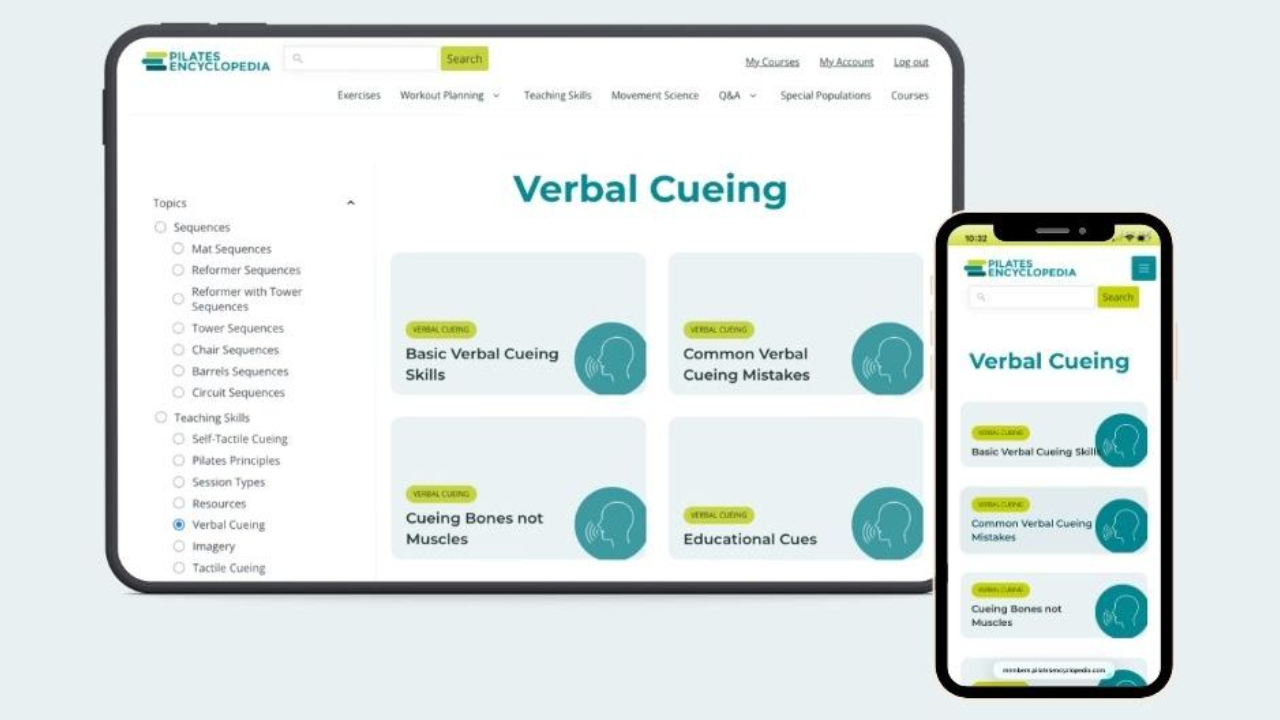
One of the questions many teachers wrestle with — and I touch on this in the video — is whether it’s okay to “borrow” cues from other teachers you admire. The answer? Yes! Embrace effective language that helps learners — just make sure it fits your teaching voice and feels authentic to you. You don't have to use a cue that doesn't make sense to you. Keep looking for one that does. (Hint: the Pilates Encyclopedia membership has thousands of cues you can dig through. Not kidding.)
Your words are a tool. The more intentional you become with them, the more your clients will move with confidence and clarity.
Start Practicing Today
After watching the video, try these quick exercises:
✅ Record yourself teaching one exercise and listen back — how clear was your message?
✅ Focus on cuing awareness, not just movement in your next class.
✅ Swap complex terms for simple visual or sensation-based language.
Final Thoughts
Verbal cueing is an art — one you can refine over time with awareness and practice. Whether you're teaching group classes or one-on-one sessions, your words can guide students toward better alignment, deeper engagement, and greater joy in movement.
Now I'd love to hear from you. What are some bad habits that you want to get rid of in your verbal cueing? Leave a comment below the YouTube video.
If you want to get better at verbal cueing asap, I invite you to check out my 30-Day Verbal Cueing Bootcamp called The Cueing Cure.