How Do You Explain Pilates?
Oct 26, 2016
If you're a Pilates teacher, you've probably been asked this question:
“So…what exactly is Pilates?”
And then, strangely enough, you find yourself struggling to explain the very thing you spend your days teaching.
You know what Pilates is. You know how it feels. You know how much there is to learn from it. But putting all of that into one or two sentences for someone who has never experienced Pilates?
That's surprisingly difficult.
A fellow teacher once told me that her explanation starts like this:
“It's not yoga. Pilates teaches functional movement to help you get through your day. It strengthens your core and helps improve your posture.”
That's actually a pretty good answer.
It's short. It's relatable. And most importantly, someone who has never done Pilates can understand it.
But is that really all Pilates is?
Not even close.
So, What Is Pilates?
At its simplest, Pilates is a system of exercise that develops strength, mobility, coordination, control, and body awareness through precise, intentional movement.
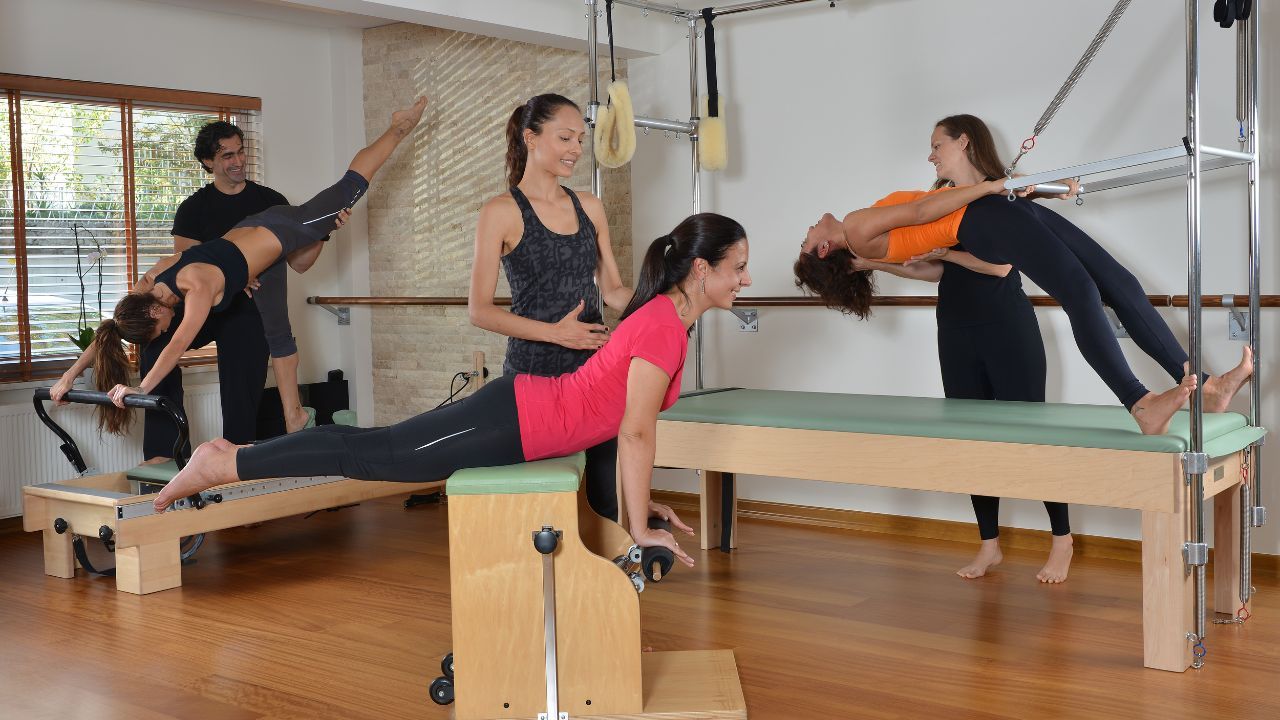
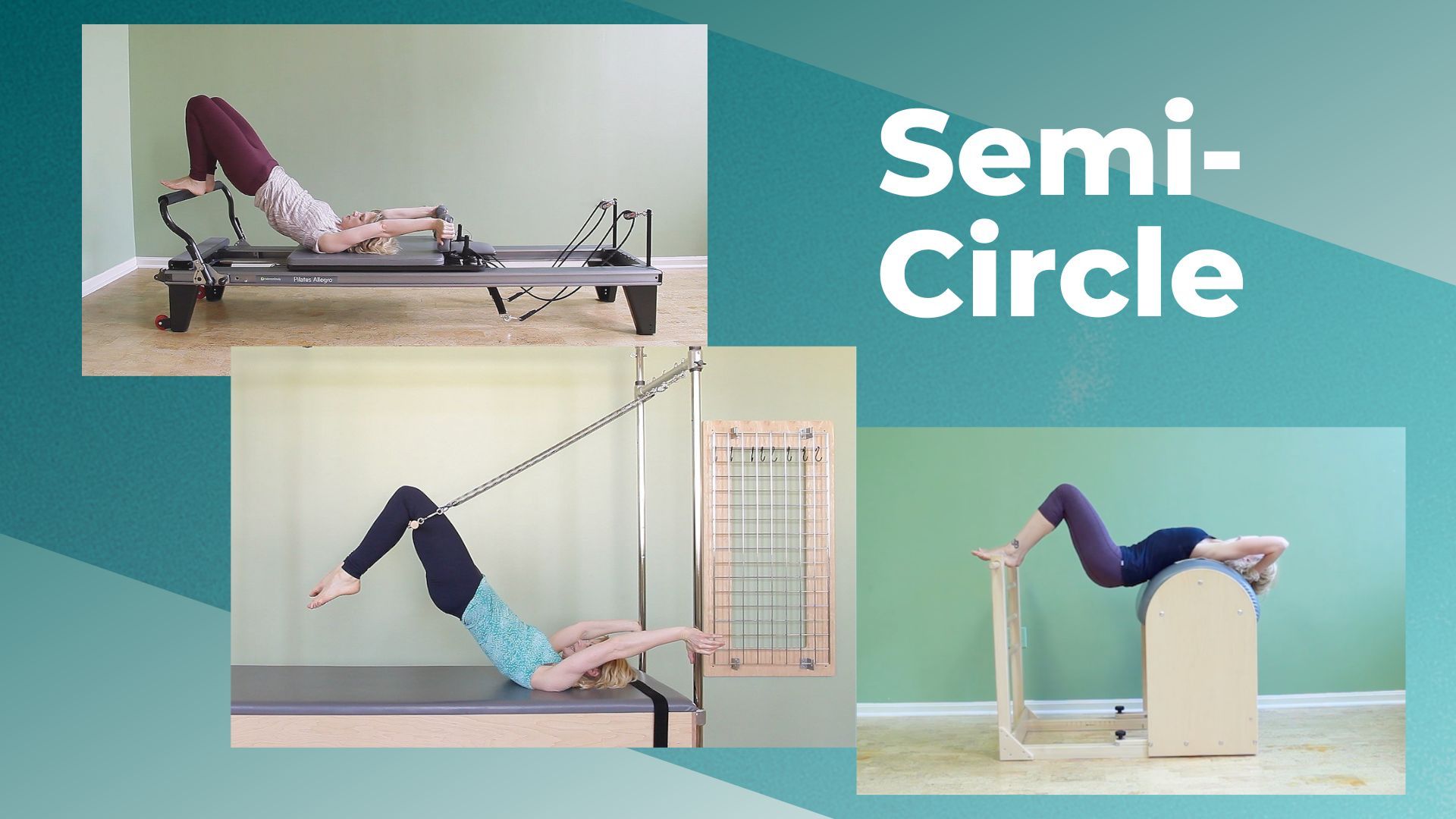
It can be practiced on a mat or with specialized equipment such as the Reformer, Cadillac, Chair, and Barrels.
Pilates exercises ask you to pay attention not only to what you're moving, but also to how you're moving.
How is your spine moving?
Where are you creating unnecessary tension?
Can you organize your pelvis differently?
Can you breathe while maintaining abdominal support?
Can you make the movement more efficient instead of simply working harder?
This combination of movement and attention is one of the things that makes Pilates so powerful—and so difficult to explain in a quick elevator pitch.
Pilates Is More Than “Core Strength”
Pilates has become almost synonymous with “core strength.”
And yes, Pilates can absolutely develop the muscles of the trunk.
But if we describe Pilates only as a core workout, we're leaving out a huge part of the method.
Pilates is a whole-body movement system.
Depending on the exercise and how it's taught, you may be working on spinal mobility, hip strength, shoulder organization, balance, coordination, breathing, endurance, control, or your awareness of how different parts of your body work together.
The goal isn't simply to make one muscle—or even one group of muscles—stronger.
It's to improve the way the body works as a whole.
Pilates Is About Quality of Movement
One of the easiest ways to explain Pilates is to say:
In Pilates, how you perform the movement matters as much as the movement itself.
You can perform a leg circle, for example, by simply moving your leg around.
Or you can notice what's happening at your hip, pelvis, spine, rib cage, and supporting leg while you move.
Suddenly, a simple circle becomes a lesson in stability, mobility, coordination, and control.
That's Pilates.
The exercises give us a framework, but the real work happens in the details.
This is why Pilates often follows the principle of “less is more.”
A movement doesn't have to be big, fast, or exhausting to be challenging.
Sometimes making a movement smaller and more precise makes it significantly harder—and much more informative.
Pilates Requires Concentration
Pilates is not usually the kind of exercise where you completely tune out and let your body go through the motions.
It asks you to pay attention.
Where is your weight?
What is your spine doing?
Are you holding your breath?
Are you gripping somewhere you don't need to?
Can you maintain control as the movement becomes more challenging?
This focus creates a conversation between your brain and your body.
And as you practice, you begin to notice things you may never have noticed before.
You might discover that one hip moves differently from the other.
You might realize that your shoulders tense whenever an exercise becomes difficult.
Or perhaps you'll notice that you can move your spine easily in one direction but find another direction much more challenging.
Pilates gives you an opportunity to explore those differences.
Pilates Isn't About Achieving a “Perfect” Body
This is an important distinction.
The more Pilates you practice, the more aware you may become of your movement habits and preferences.
At first, this can be frustrating.
You improve one thing…and suddenly notice something else.
You finally understand one exercise…and discover a completely new challenge inside it.
Does it ever end?
Not really.
And that's one of the wonderful things about Pilates.
There isn't a finish line where your body suddenly moves “perfectly.”
Your body changes. Your life changes. Your activities change. And your Pilates practice changes with you.
The goal isn't perfection.
The goal is to continue developing awareness, adaptability, strength, control, and movement options.
It's a practice.
Why Pilates Is So Hard to Explain
Here's the real problem:
The more complicated your explanation becomes, the less likely someone who has never practiced Pilates is to understand it.
As teachers, we're fascinated by anatomy, biomechanics, movement strategies, breathing, motor control, and all the tiny details that make an exercise work.
The person standing in front of us may simply want to know:
“What am I going to do in this class, and why would I want to do it?”
So don't give them a lecture.
Give them something they can relate to.
You might say:
“Pilates is a whole-body exercise method that helps you build strength, mobility, coordination, and body awareness through controlled, precise movements.”
Or, for an even simpler explanation:
“Pilates teaches you to move your body with more strength, control, and awareness.”
That's enough to start the conversation.
They don't need to understand the entire Pilates method before their first class.
In fact, they can't.
Some things have to be experienced.
What Does a Pilates Class Feel Like?
If someone has never tried Pilates, it can also help to describe what they might actually experience.
Depending on the style of Pilates and the teacher, a class may include:
- controlled, precise movements
- exercises for the whole body
- spinal movement in different directions
- strengthening and mobility exercises
- coordinated breathing
- balance and stability challenges
- focused attention and concentration
- exercises performed on a mat or specialized Pilates equipment
Some movements will feel familiar.
Others may feel completely new.
And some of the smallest exercises may surprise you by being the most challenging.
That's part of the experience.
Think of Pilates Like a Friendship
Here's another way I like to explain the Pilates method.
Think about one of your closest friends.
Did you understand everything about that person the first time you met?
Of course not.
You spent time together.
You had conversations. You shared experiences. You learned little things about each other over time.
Eventually, you developed a relationship built on familiarity and trust.
Pilates can be like that.
In the beginning, you're getting acquainted.
The exercises may feel unfamiliar. You're trying to remember where your feet go, when you're supposed to breathe, what your teacher means by “neutral pelvis,” and why something that looks so simple suddenly feels so difficult.
But you keep showing up.
Gradually, the exercises become more familiar.
You begin to recognize patterns.
You understand your own movement tendencies a little better.
You start to know which exercises help you feel more mobile, which ones challenge your strength, and which ones require your full concentration.
Pilates becomes something you know rather than simply something you do.
You Have to Experience Pilates to Understand It
And perhaps that's ultimately the best answer to the question: “What is Pilates?”
You can explain the exercises.
You can talk about strength, mobility, posture, coordination, breathing, and control.
You can describe the Reformer.
You can explain the principles.
But none of those descriptions completely captures the experience of Pilates.
Because Pilates isn't just a collection of exercises.
It's a way of exploring movement.
The exercises give you opportunities to notice, experiment, adjust, learn, and gradually become more skilled at using your body.
That's difficult to communicate in an elevator pitch.
And that's okay.
How Should Pilates Teachers Explain Pilates?
Keep it simple.
Speak to the person in front of you rather than trying to communicate everything you know about the method.
If someone wants the 10-second explanation, try:
“Pilates is a whole-body exercise method that builds strength, mobility, control, and body awareness through precise, intentional movement.”
If they're curious, tell them more.
And if they're really curious?
Invite them to experience it.
Because sometimes the best way to explain Pilates isn't to explain it at all.
It's to move.
How Do You Explain Pilates?
Every Pilates teacher eventually develops their own answer to this question.
And that answer often evolves as your teaching evolves.
So the next time someone asks you, “What is Pilates?”, don't worry about finding the perfect definition.
Give them something simple and meaningful.
Then let the method do the rest.