Imagine an Orchestra Playing a Symphony...
Feb 13, 2016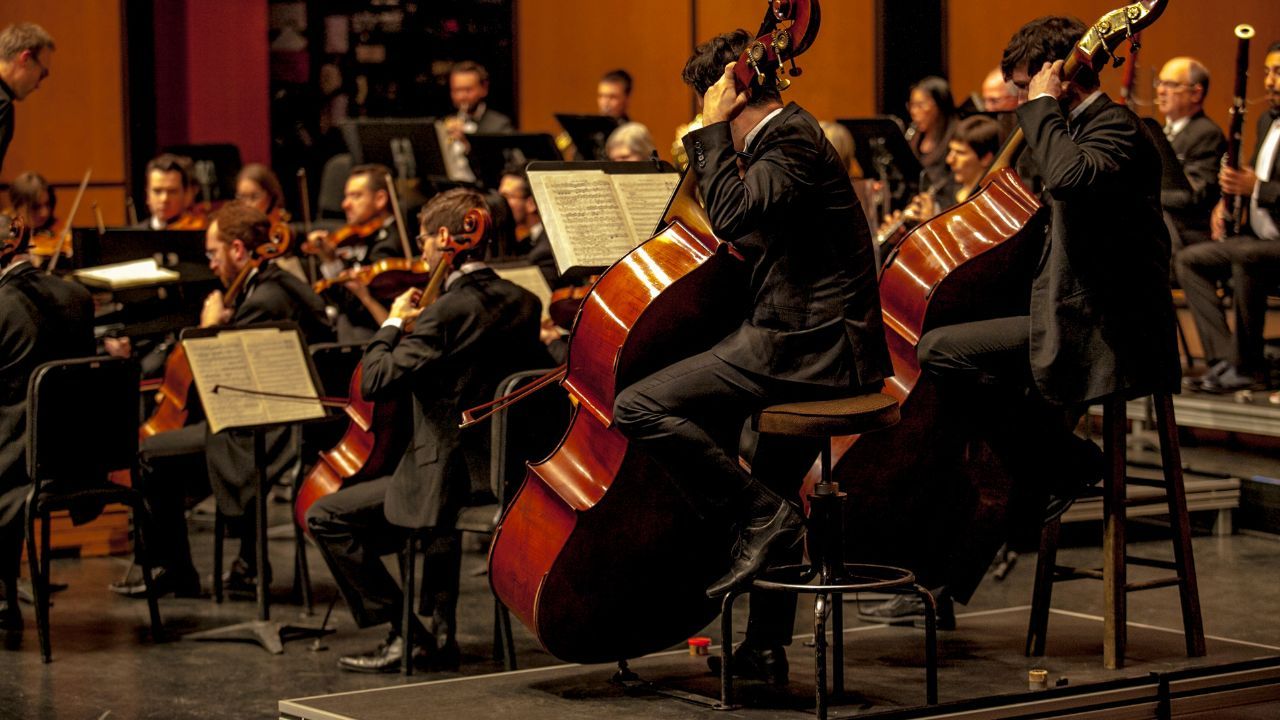
I often use metaphors to explain how Pilates works because technical and anatomical language isn't always easy to connect with. One metaphor I share with people who are considering Pilates is that of a symphony orchestra. It gives them a sense of whether this approach to movement might resonate with them.
Imagine an orchestra seated on stage, performing a beautiful symphony.
Each musician has a specific role. Every instrument must play the right note, at the right moment, and at the right volume. If the clarinet enters too early, it disrupts the flow of the music. If the tuba in the back plays too loudly, it overpowers the rest of the orchestra.
When that happens, the piece no longer makes sense. The beauty of the music is lost and what remains is noise.
Our bodies work in much the same way.
Each muscle has its own part to play. Muscles need to activate at the right time, in the right sequence, and with the appropriate amount of effort. If one muscle works too hard—if it plays too loudly—it becomes difficult to sense the contribution of the others. Movement begins to feel tiring and effortful rather than coordinated and efficient. It simply isn't as enjoyable.
One of the things that makes Pilates unique is that it doesn't embrace the idea that more is always better. The goal isn't to recruit every muscle and ask it to work at maximum intensity all at once.
In some forms of exercise, the emphasis is on producing as much effort as possible: "Everyone in—play louder!"
Pilates takes a different approach.
Sometimes the invitation is for one muscle to soften its voice for a moment so another can finally be heard. We learn to notice which muscles tend to dominate and which ones have been drowned out. We experiment with timing, sequencing, and subtle adjustments until the whole system begins to work together.
The result isn't less strength. It's better coordination.
Like a well-rehearsed orchestra, the magic doesn't come from one instrument playing the loudest. It comes from each musician contributing exactly what is needed, exactly when it's needed.
Mindset influences the outcome of Pilates. If students don't understand that the goal isn't simply to work harder, but to listen, refine, coordinate, and participate in the process of discovering how their bodies move best, they'll often miss the very results they're hoping for. As teachers, we can find ourselves in an exhausting tug of war—constantly trying to get clients to slow down, use less effort, or pay attention to subtleties they don't yet value. It's not much fun for either person, and it's rarely effective. When students embrace the mindset that Pilates is a practice of awareness and skill-building, the work becomes more enjoyable and the results tend to follow. In our Pilates Teacher Roadmap blog post, we share the four pillars of the Own the Room framework that help teachers elevate both their teaching and their impact. Mindset is one of those pillars, because how someone approaches the work often shapes what they take away from it.
That's what Pilates helps us practice: creating harmony in movement.