Don't Forget To Challenge The Sides of Your Body
Aug 12, 2019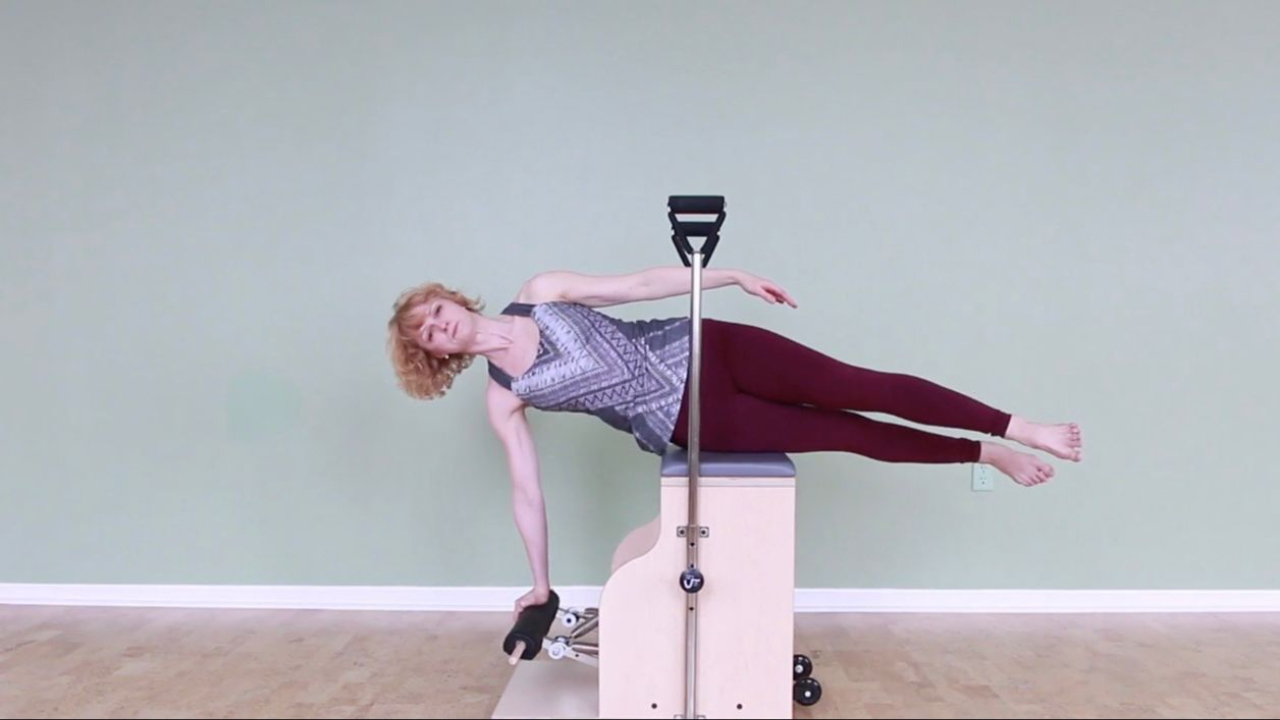
How many side-lying exercises can you think of? Probably a few, such as the Side Kick Series, or Sleeper.
But not nearly as many as supine exercises, right? There are not many exercises in the Pilates repertoire where the force to the core comes from the side, challenging the body in the frontal plane. When building a balanced body, it's important not to forget side-lying exercises.
To someone who's never tried it, Side Balance (also called Lateral Flexion or Side Roll Up) on the Chair barely looks like an exercise. Many people are surprised to find how difficult it is to find and maintain good alignment in this position.
I highly recommend just holding the exercise before adding any variations. Believe me, at first, it will be plenty! The first step is - as always - to build a good foundation. Many of us will find ourselves with our pelvis falling back and our ribcage forward. This is due to an imbalance in symmetry and balanced oblique strength between the right and left sides of the body. It takes time and focus to build the needed coordination and strength to keep ourselves in alignment.
Rushing into variations won't correct the underlying imbalance. Wait for great alignment on the sagittal and transverse planes. Once you find that, go ahead and add some progressions like arm pumps, overhead arm reach or side bend or leg kicks in the frontal plane.
Want to dive deeper? Inside the Pilates Encyclopedia, we explore every tiny detail of this exercise to help you and/or your students squeeze every ounce of benefit from it. Join us today.