Spine Corrector Warm-Up For Thoracic and Ribcage Mobility
Apr 03, 2019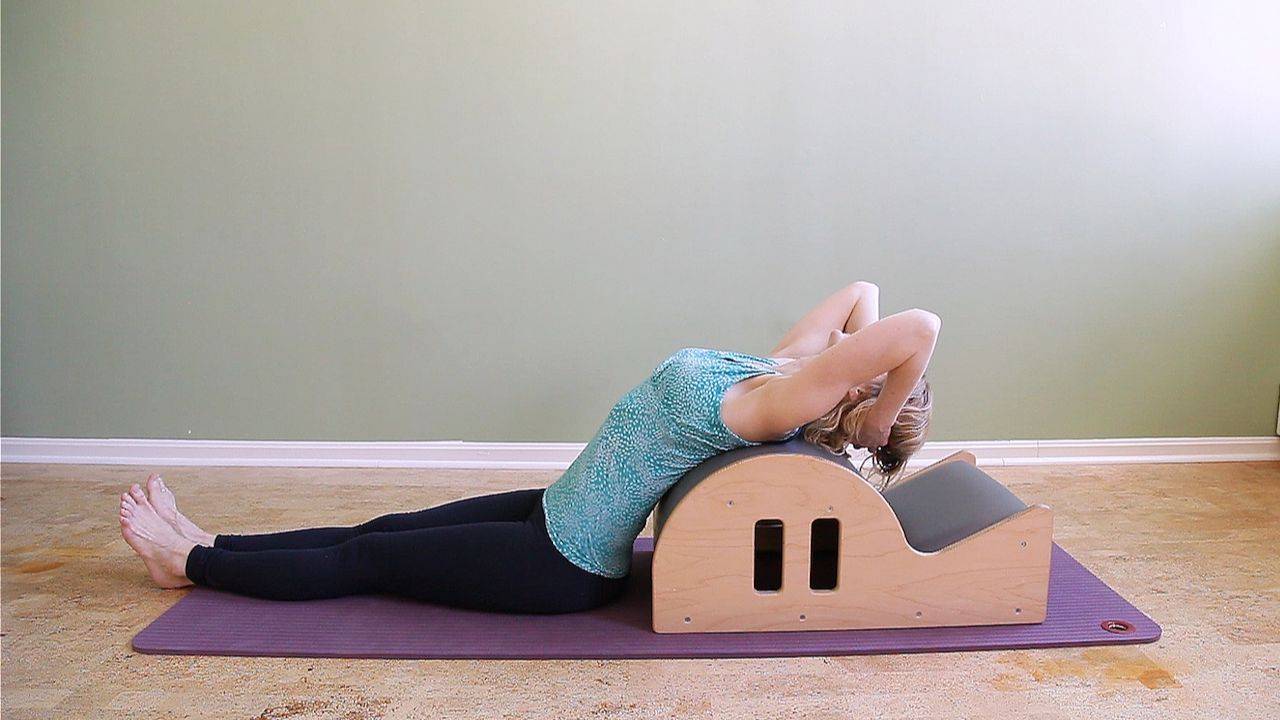
Have you ever noticed a client whose ribcage seems to move as one solid block?
Instead of the thoracic spine moving segment by segment, the entire ribcage shifts together. When mobility is limited in one area of the spine, the body often finds movement somewhere else. For example, a client with a relatively stiff thoracic spine may compensate by creating more movement through the lumbar and/or cervical spine.
That’s one reason thoracic and ribcage mobility deserve attention in a Pilates workout.
Why Thoracic Mobility Matters
The thoracic spine is designed to move in multiple directions: flexion, extension, lateral flexion, rotation, and translation.
The ribs also need to move in relationship to the thoracic spine and the breath. They open like a fan during the inhalation and close during exhalation. Ideally, movement is distributed throughout the trunk rather than repeatedly concentrated in just one area.
When the thoracic spine and ribcage are able to move more freely, clients may find it easier to achieve spinal articulation, rotation, extension, and lateral flexion without relying as heavily on the lumbar or cervical spine.
The goal isn’t to create as much movement as possible. It’s to create better-distributed movement, which results in balanced muscle development.
Why Use the Spine Corrector?
The Spine Corrector provides support while giving the thoracic spine an opportunity to move over a curved surface.
This makes it particularly useful during a warm-up. The shape of the apparatus can help clients explore movement in a way that feels supported rather than forced. They are guided into movement thereby developing new or previously under-used movement pathways.
It can also give the teacher useful information.
As your client moves, observe:
-
Does the bottom part of the ribcage move as soon as the top part moves? This indicates a lack of segmental movement between the two points.
-
Is the ribcage movement smooth, or are there rough transitions anywhere?
-
Does one side move differently from the other?
-
Does the client immediately compensate through the lumbar and/or cervical spine?
These observations can help guide what you choose to teach next.
Move the Thoracic Spine in More Than One Direction
Thoracic mobility isn’t just about extension.
A well-rounded warm-up should give the spine opportunities to explore several planes of movement, including:
Flexion and extension: Encourage movement through the thoracic spine rather than allowing all of the extension to come from the lower back. Fine-tuning your positioning on the Spine Corrector will be especially helpful for this.
Lateral flexion: Side bending can help clients explore movement between the ribs and notice differences between the two sides of the trunk.
Rotation: Improving rotation in the thoracic spine is most people's greatest opportunity for improvement. It often relieves back tension and improves ROM in the other directions. It results in a very free feeling.
Breathing: The breath itself creates movement through the ribcage. Encourage expansion into the back and sides of the ribs rather than focusing only on the front of the chest.
A Useful Warm-Up Before Your Pilates Session
This Spine Corrector sequence can be used near the beginning of a session to prepare the trunk for exercises that require spinal articulation, rotation, extension, or coordinated movement of the arms and ribcage.
Keep the movements comfortable and controlled. More range isn’t necessarily better. Look for ease, distribution, and organization.
Most importantly, pay attention to what changes.
After the warm-up, does spinal movement look more fluid? Is extension distributed more evenly? Does rotation feel easier? Can the client move the ribcage without immediately moving the pelvis or lumbar spine?
Those changes can tell you much more than simply measuring how far someone can move.
Watch the video below to follow along with this quick Spine Corrector warm-up and explore thoracic spine and ribcage mobility in multiple directions.
Looking for more ideas for thoracic mobility? Inside the Pilates Encyclopedia membership, we have in-depth tutorials for every single Pilates exercise. Learn more and join today.